 |
| The chickadee~ unfazed by a recent ice storm ~ is at the top of the list of my favorite birds. |
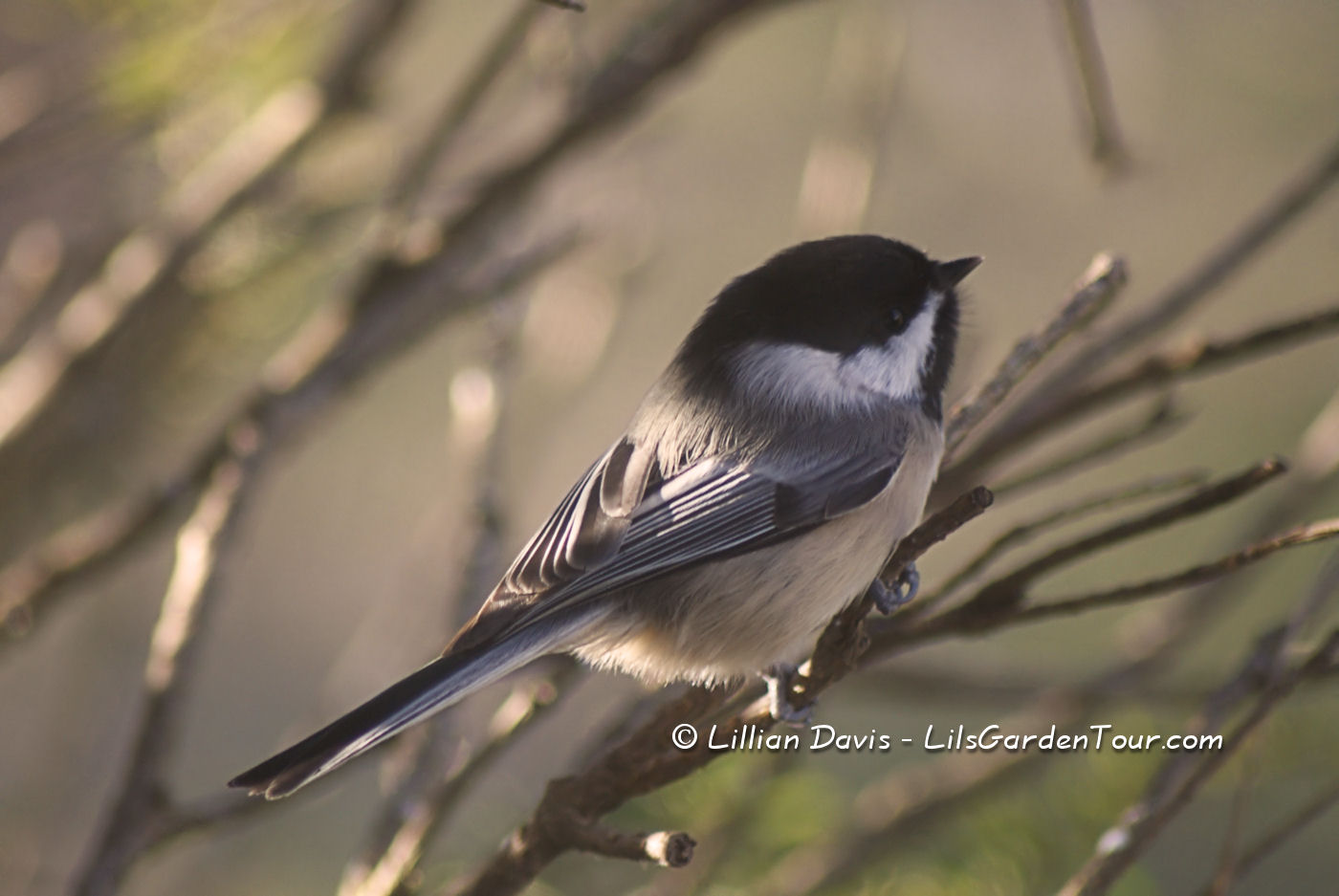 |
| have you ever been cussed out by a chickadee? It’s very hard to be offended! |
|
| The chickadee~ unfazed by a recent ice storm ~ is at the top of the list of my favorite birds. |
|
| have you ever been cussed out by a chickadee? It’s very hard to be offended! |
Most people, when they move to a new house, take with them their furniture, china and other household possessions. I made sure all my favorite plants came with me.

An assortment of trees, shrubs and perennials, waiting for spring and a spot in a new flowerbed.
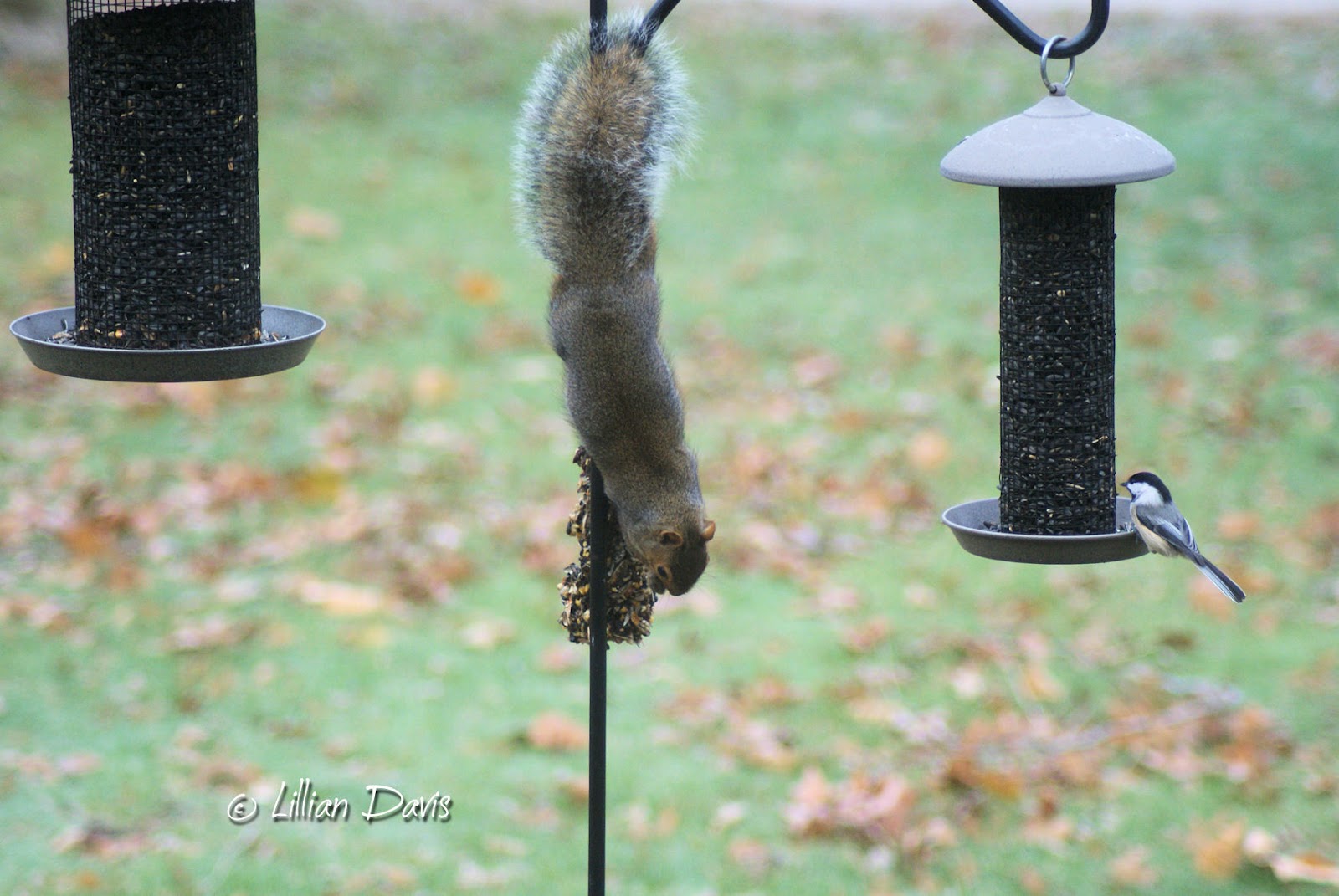
A little thistle, a little sunflower seed and Voila!


This is what I saw when I opened my curtains this morning…
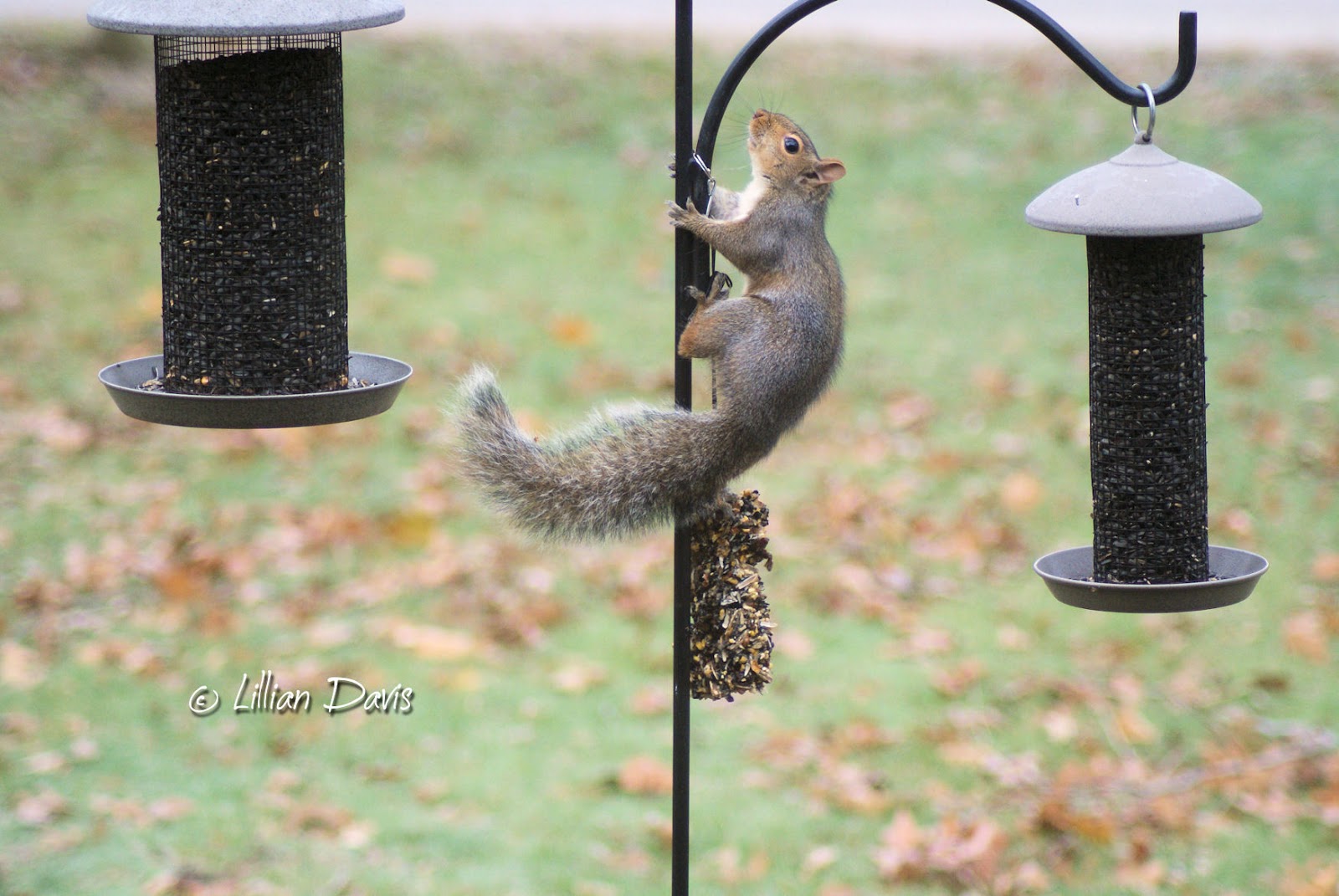
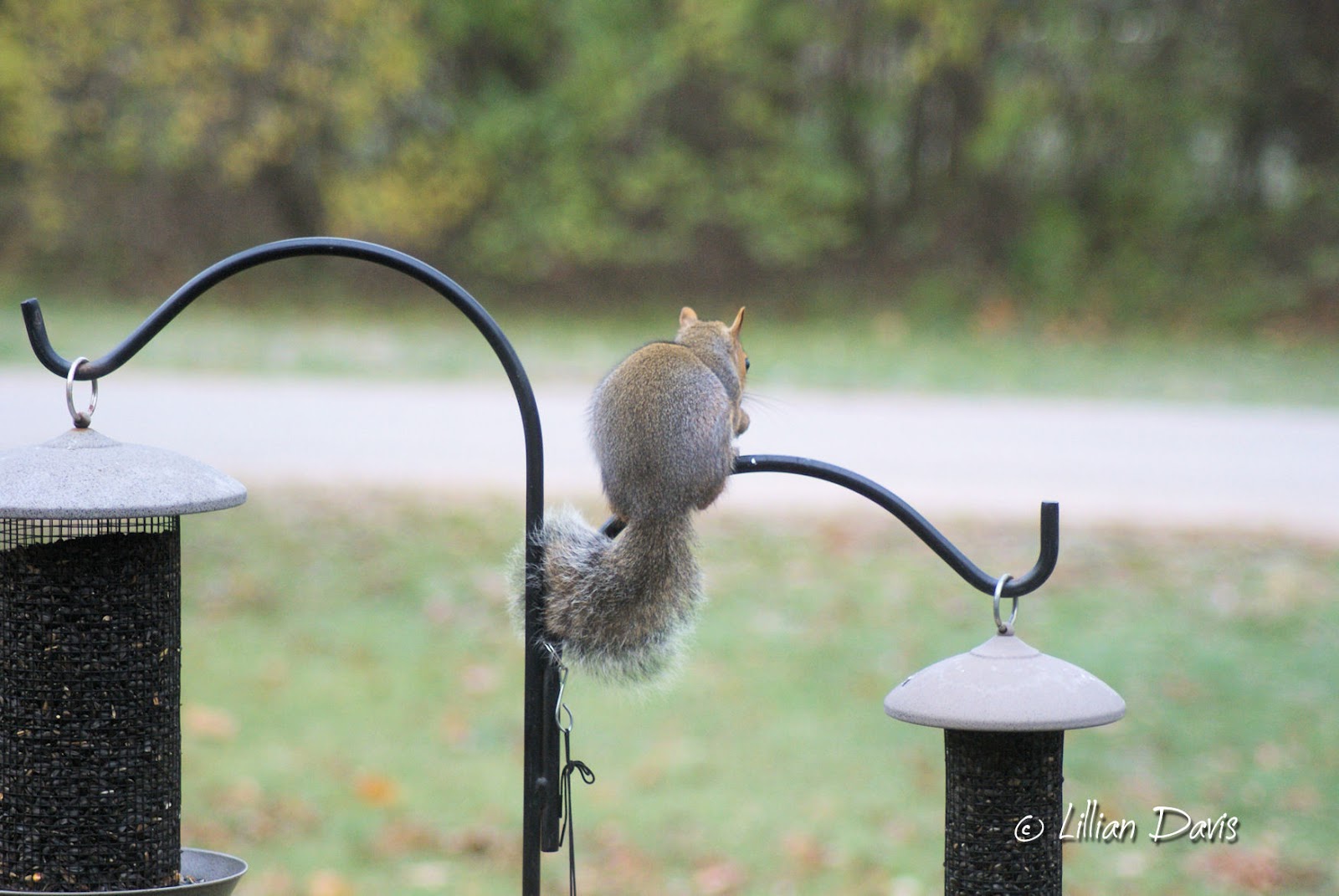
Apparently Squirrels can climb shepard hooks. Silly me for thinking they couldn’t!

Lots of changes happening at Lil’s Garden these last two months. We’ve moved to a new house, in a new town and adjusting to a new job while wrapping up the old life and filling Christmas orders at the same time. Very exhausting I’ll tell you, but we are adapting.
These changes have been in the planning for a long time and we’ve finally been able to realize them. We are very happy with our new place and I’m thrilled with my new, much bigger yard! And best of all, it’s a blank slate! I get to re-landscape EVERYTHING! I can’t wait till spring! I’ll be spending the winter scouring all my gardening and landscaping books for the perfect design ideas ( of course I have a few ideas already rolling around in my head).
There’s also room for a bigger greenhouse, yay!
The only drawback I see is that we are surrounded by woods loaded with wildlife~ including deer.
I now get to test all those deer resistant plants and anti deer theories in my new designs and hopefully, with the help of my two Labradors (who by the way have never seen a deer their entire sheltered lives!) I can keep the critter damage to a minimum. Wish me luck!


Life’s journey is not always clear, yet we continue down the path to see what’s around the bend…. L.Davis

(Not so) Patiently waiting for the Plane to arrive.

Color Guard at the Home coming ceremony


Finally!

Long Due Hug

Take me home guys!


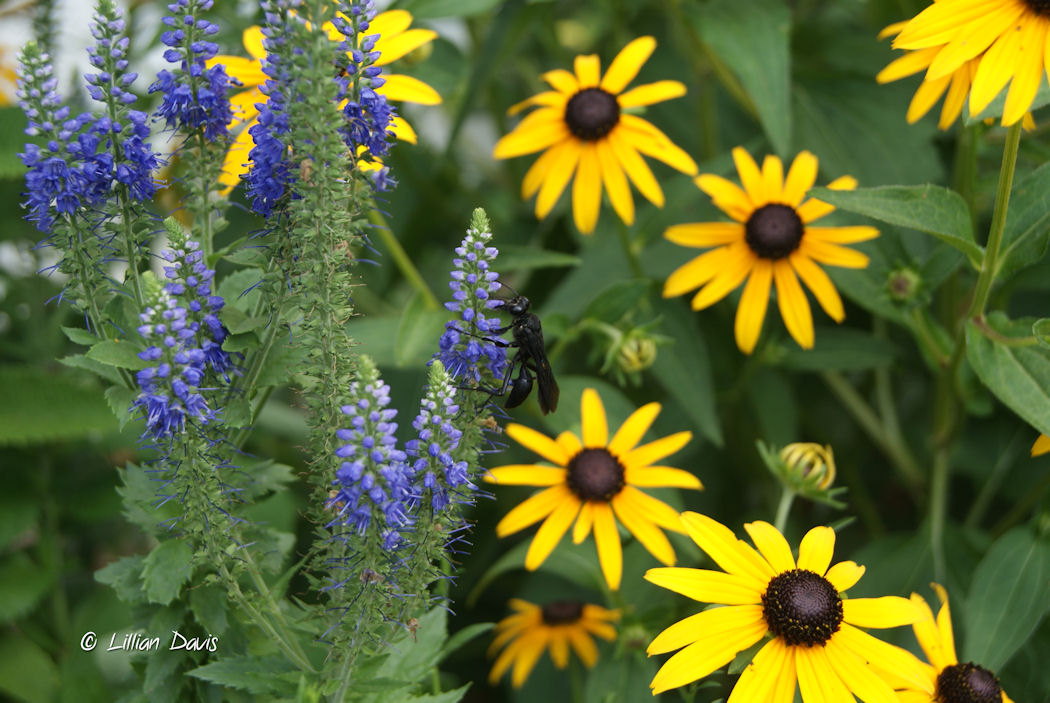
I was taking pictures of my black-eyed Susans when I spotted this huge black wasp, busily sipping nectar from the last of the veronica blooms. This thing is about as long as my thumb!
Now I’m used to seeing the Cicada wasps flying around (unnerving as they are while they buzz around you if you get too close to their burrow), but since I’ve never seen this one, I did a little bit of research.
It is actually called a Great Black Wasp. I’d say the name fits, don’t you agree?
It’s also known as a Katydid Hunter or a Steel Blue Cricket Hunter. Just as the cicada wasps hunt cicadas, the Great Black Wasp hunts katydids and crickets, burying the paralyzed insects in the ground with their eggs.
Interestingly though, the adults only eat nectar.
 Lil's Garden Tour